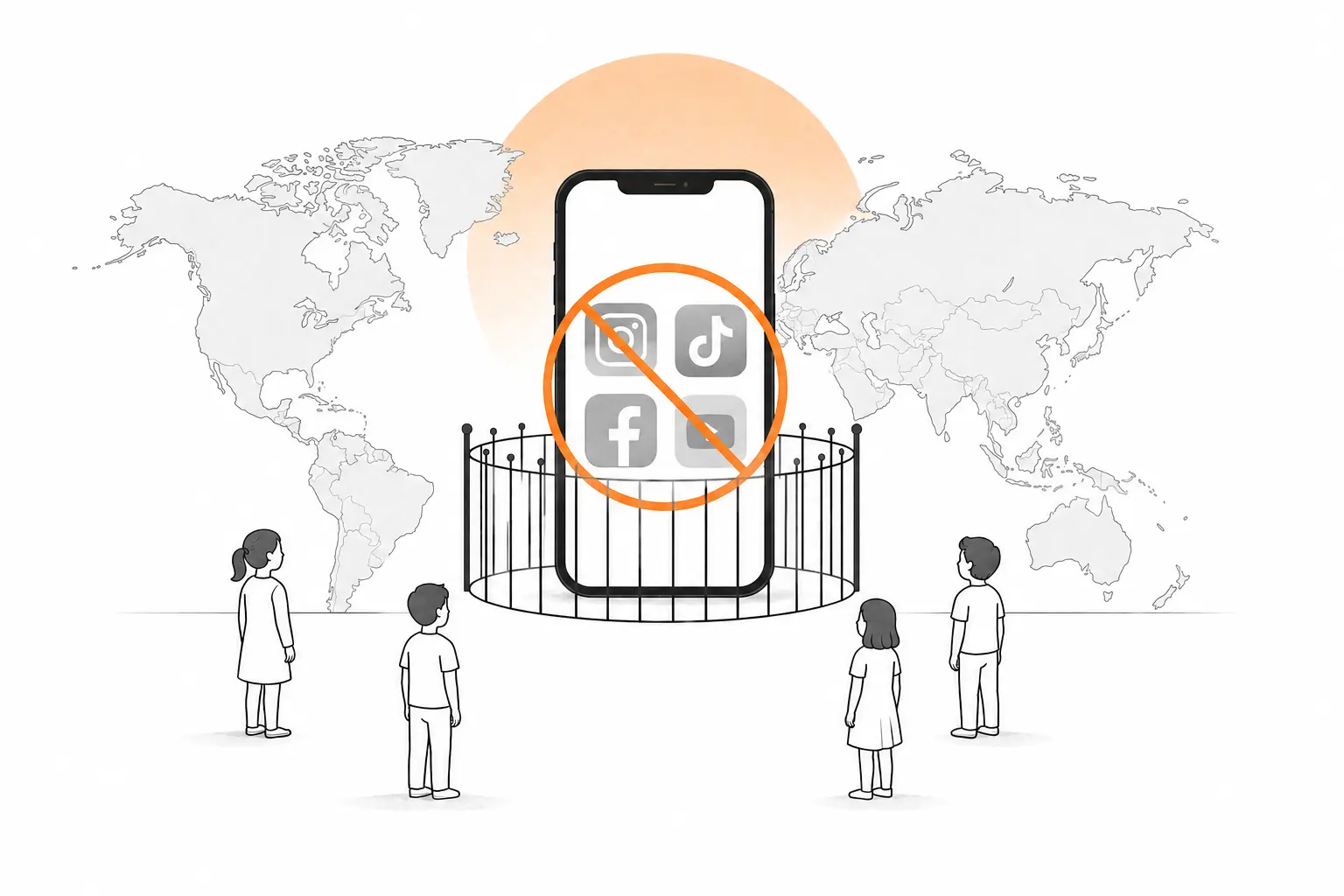
Australia became the first country to implement a nationwide social media ban for under-16s, and since then a growing number of countries have begun proposing, drafting, approving, or implementing similar restrictions. Here is an overview of the latest developments around the world.
Countries Restricting Social Media Access for Minors
| Country | Age Limit | Status | Started |
|---|---|---|---|
| Australia | Under 16 | In force | December 2025 |
| Indonesia | Under 16 | In force | March 2026 |
| Vietnam | Under 16 | In force | 2025–2026 rollout |
| Malaysia | Under 16 | In force | June 2026 |
Countries That Have Approved, Proposed, or Are Considering Social Media Age Restrictions
| Country | Age Limit | Status | Starts / Expected Start |
|---|---|---|---|
| France | Under 15 | Partially approved | Target: September 2026 |
| Romania | Under 16 | Partially approved | Not announced |
| Poland | Under 15 | Drafting | Expected 2026–2027 |
| Slovenia | Under 15 | Drafting | Expected 2026–2027 |
| Norway | Under 15 | Under consultation | Expected 2026–2027 |
| United Kingdom | Under 16 | Under consultation | Not announced |
| Austria | Under 14 | Proposed | Expected 2026 |
| Denmark | Under 15 | Proposed | Expected 2026 |
| Greece | Under 15 | Proposed | January 2027 (planned) |
| Kazakhstan | Under 16 | Proposed | Not announced |
| Montenegro | Under 13 (or under 16 with parental consent) | Proposed | Not announced |
| Pakistan | 13–16 | Proposed | Not announced |
| Philippines | Under 18 | Proposed | Not announced |
| Portugal | Under 16 | Proposed | Not announced |
| Spain | Under 16 | Proposed | Expected 2026–2027 |
| Turkey | Under 15 | Proposed | Not announced |
| Italy | under-15 restrictions under debate | Proposed | Expected 2026–2027 |
| Malta | Under 13 | Announced | Not announced |
| Canada | Under 14 | Considering | Not announced |
| Ecuador | Under 15 | Considering | Not announced |
| Germany | Under 16 | Considering | Not announced |
| Iceland | 15–16 | Considering | Not announced |
| India | Under 16 | Considering | Not announced |
| United States | 13–16 | Various proposals | Varies by state |
Why Are Governments Considering Bans?
Research increasingly links heavy social media use among adolescents to a range of potential harms:
- Increased anxiety and depression
- Sleep disruption
- Reduced attention span
- Cyberbullying and online harassment
- Exposure to harmful content
- Excessive screen time replacing real-world activities
Many policymakers compare social media to other products that society restricts for children, such as alcohol, tobacco, and gambling.
Some countries have also introduced school phone bans, which prevent students from using smartphones during class or throughout the school day. These policies are becoming common across Europe and Asia.
Will Social Media Bans Work?
The answer remains uncertain.
Supporters argue that age restrictions can reduce exposure to addictive platforms during critical stages of development. Critics point out that determined teenagers may find ways around age verification systems and that responsibility should remain primarily with parents.
Regardless of the outcome, the global direction is becoming increasingly clear. Governments are no longer treating social media as just another technology product. Instead, many now view it as a public health issue that may require age-based protections.
Note: Laws and proposals regarding children’s social media access are evolving rapidly. Information in this article reflects the status of policies as of June 2026.
References
Center for European Policy Analysis (CEPA). Mapping the Spread of Child Safety Rules. (2026).
World Health Organization. Adolescent Mental Health Fact Sheets.